Core Identification
Category
Philately / Southeast Asian Postal History
Historical and Iconographic Overview
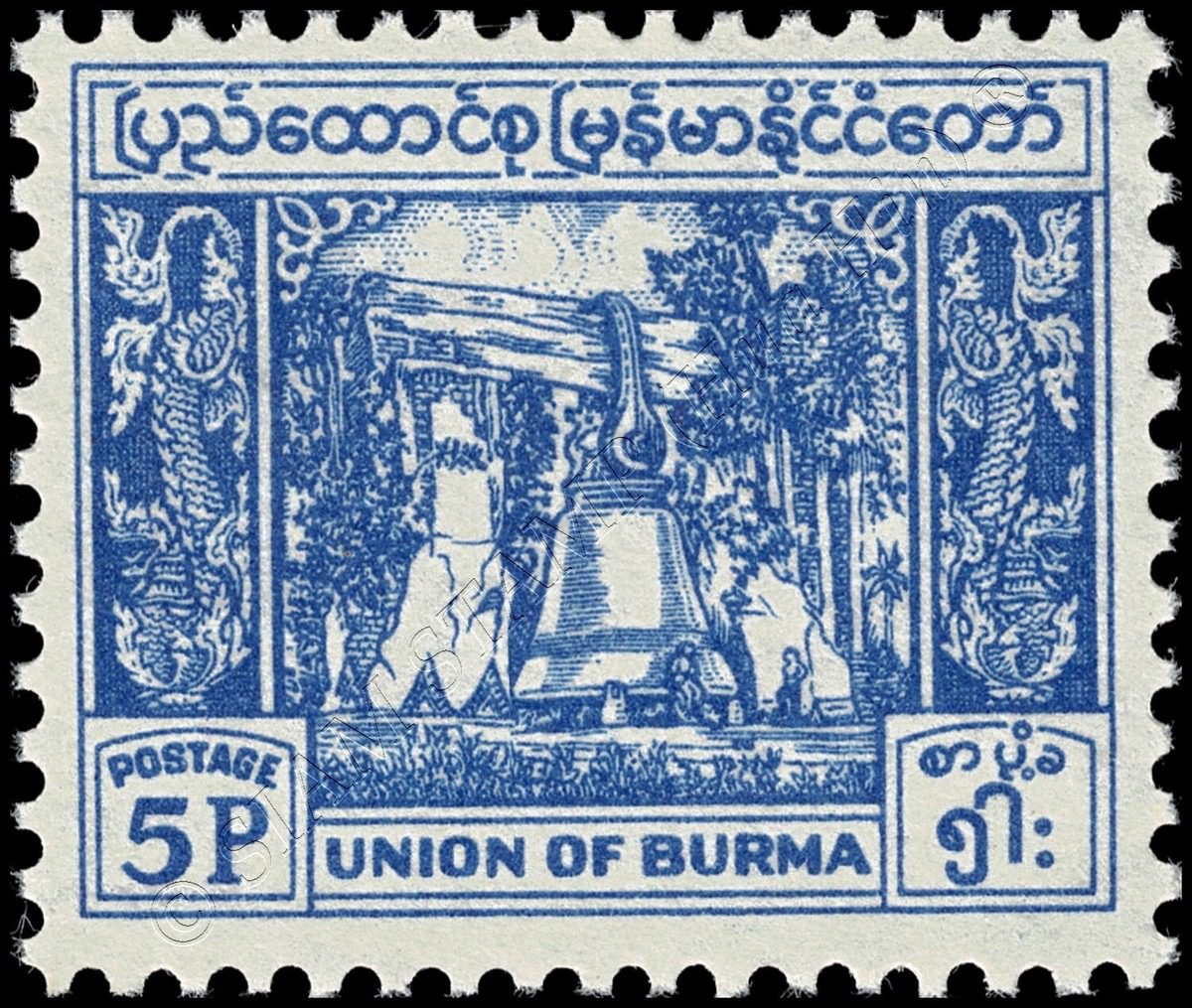
The 1949 "Bell of Freedom" issue is one of the most culturally significant stamps from the early years of the Union of Burma. It was released to celebrate the young republic's first year of sovereignty.
Subject: The Mingun Bell (Bell of Freedom)
Country of Issue: Union of Burma (now Myanmar)
Date of Issue: January 4, 1949
Denomination: 1 Anna (1a)
Color: Orange (variations in shading exist from light orange to deep orange)
Printing Process: Recess (Engraved)
Printer: Thomas De La Rue & Co., Ltd., London
Perforation: $12 \frac{1}{2}$
Watermark: Multiple Elephant Heads (Sideways)
Format: Standard rectangular definitive
Historical and Iconographic Overview
The issuance of this stamp marked the first anniversary of Burma’s independence from British rule, which was officially declared on January 4, 1948. At the time, the Union of Burma was a newly formed parliamentary democracy led by President Sao Shwe Thaik and Prime Minister U Nu
The Mingun Bell
The central icon of the stamp is the Mingun Bell, located in the Sagaing Region. Cast between 1808 and 1810 by order of King Bodawpaya, it weighs approximately 90 tons (55,555 viss). For over a century, it was the largest functioning bell in the world. In the context of the 1949 issue, the bell was rebranded as the "Bell of Freedom," symbolizing that the voice of the Burmese people was finally ringing out across the world, free from colonial oversight.
Inscriptions and Translations
The stamp features bilingual text, reflecting the transition period where English remained a recognized administrative language alongside Burmese.
Top Inscription: ပြည်ထောင်စုမြန်မာနိုင်ငံတော် (Pranyhtaungcu Mranma Nuingngamtau)
Translation: Union of Burma
Central Inscription: လွတ်လပ်ရေး ပထမနှစ်ပတ်လည် ၁၉၄၉ (Lut-lat-ye Pa-hta-ma-nhit-pat-la-nyi 1949)
Translation: First Anniversary of Independence, 1949
Bottom Inscription: UNION OF BURMAValue: 1a (One Anna)
Historical Issuer Context
Following World War II and the assassination of the independence hero General Aung San in 1947, Burma opted to leave the British Commonwealth entirely upon gaining independence. This made the 1949 stamps unique; unlike many former colonies, they did not feature the British monarch’s silhouette. Instead, the government utilized indigenous symbols like the Mingun Bell, Chinthe (mythical lions), and traditional dancers to forge a new national identity.